MAK SYNTH
A hands-on synthesizer kit for learning sound design, electronics, and music production. You build the controller, wire the hardware, and hear how each part shapes the sound.
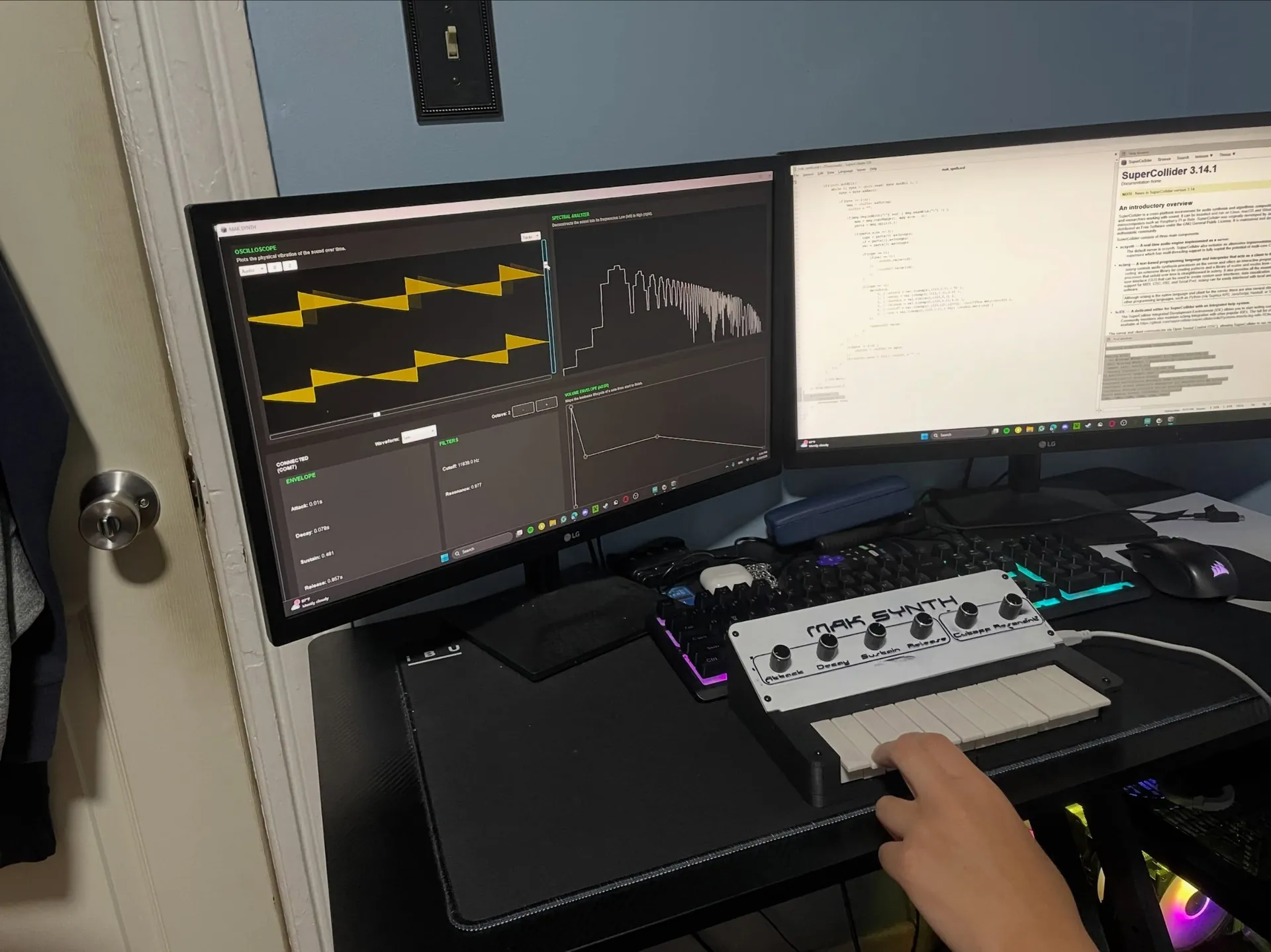
A synthesizer you build to understand
MAK Synth connects a physical controller you assemble, twelve keys and six knobs on a custom circuit board driven by an Arduino, to a sound engine that runs on your computer. Press a key or turn a knob and the sound changes right away, while on-screen visualizers show the waveform, its frequencies, and the volume envelope as you play.
What you do with it
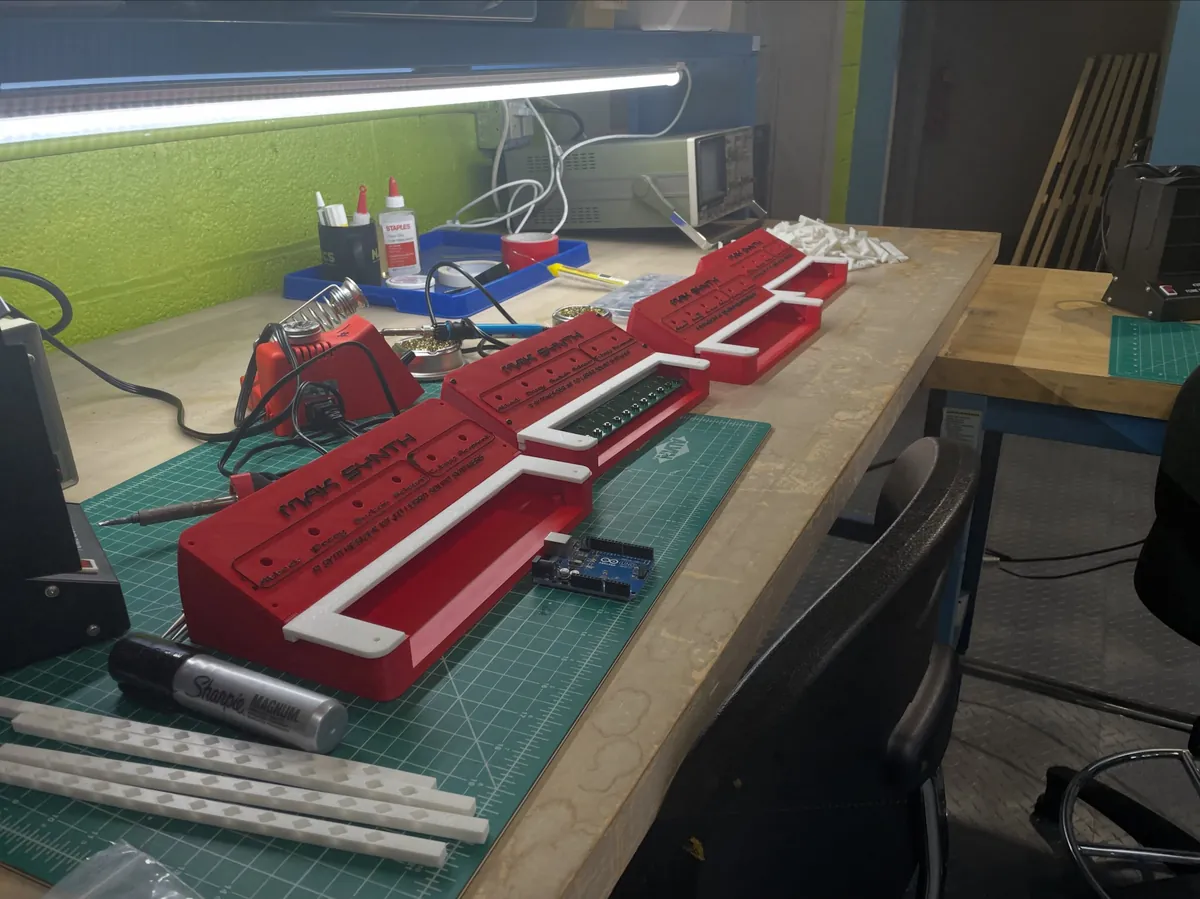
Build the hardware
You assemble the controller yourself: a custom circuit board for the twelve keys and six potentiometers, wired to an Arduino that reads every press and turn. This is where the electronics stop being abstract, from the pull-up resistors behind the keys to the header that carries each signal to the board.
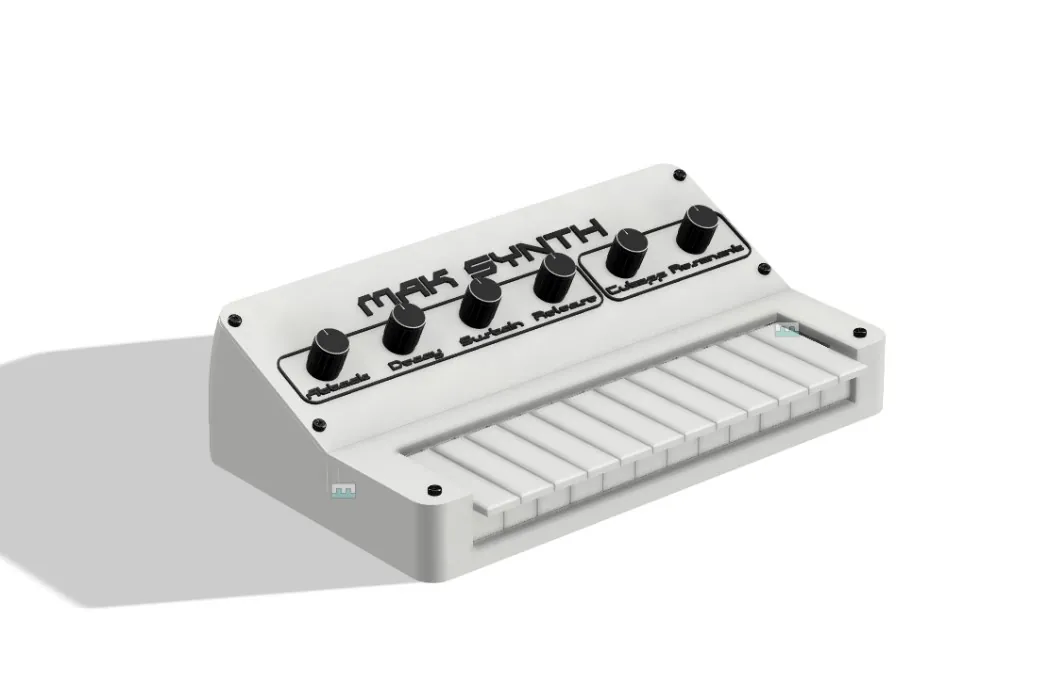
Shape the sound
Six knobs give you direct control. Four shape the volume envelope (attack, decay, sustain, and release) and two shape a resonant low-pass filter (cutoff and resonance). The engine turns your keys into oscillators you can layer into chords and play across four octaves.
See the signal
As you play, three visualizers make the sound visible. An oscilloscope traces the waveform, a spectral analyzer breaks it into frequencies, and a graph draws the envelope. Watching them react as you move a knob is what connects the control in your hand to the physics of the sound.
At a glance
- Keys
- 12, one octave
- Controls
- 6 knobs: Attack, Decay, Sustain, Release, Cutoff, Resonance
- Controller
- Arduino, USB serial at 115200 baud
- Sound engine
- SuperCollider, on Windows and macOS
- Waveforms
- Sine, sawtooth, pulse, noise
- Polyphony
- Up to 12 notes at once