About MAK SYNTH
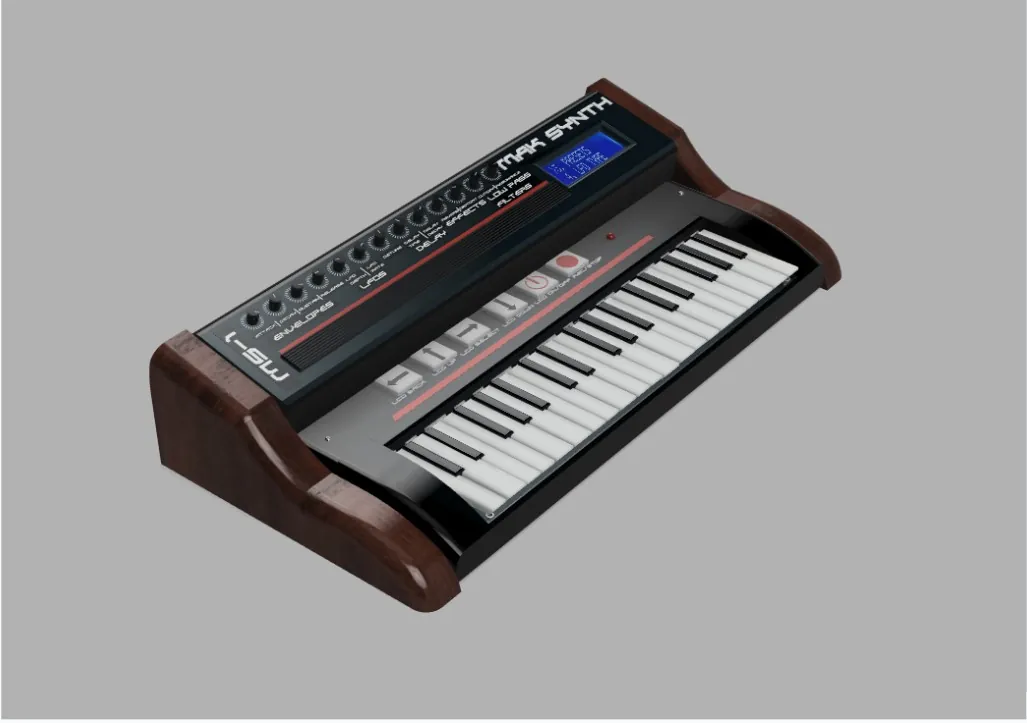
MAK Synth began as an independent project built out of an interest in electronics, engineering, and music. The idea grew into a working educational synthesizer across four hardware prototypes.
I handled the whole process on my own: designing circuits and custom PCBs, modeling the enclosures, programming the hardware, and writing an educational curriculum to go with it. The aim was to build more than an instrument. I wanted to make the engineering behind electronic music approachable for people with little or no prior experience.
- Hardware prototypes
- 4
- Custom PCB designs
- 2
From concept to a finished kit
Each prototype was a chance to rethink the design. I kept experimenting with the electronics, the physical layout, the enclosure, and the way someone would actually use it. The concept gradually turned into the MAK Synth kit you can build today.
What went into building it
Developing MAK Synth meant working across several disciplines at once. Each decision had to account for more than whether something worked. It also had to be possible to manufacture, assemble, teach, and use.
PCB design
Custom circuit boards organize the electronics and simplify assembly, with separate boards for the buttons and the potentiometers that connect the physical controls to the Arduino.
CAD and prototyping
The enclosure and internal layout were modeled in CAD and 3D printed, which made it possible to test component placement, ergonomics, assembly, and manufacturing limits.
Curriculum
A beginner curriculum introduces sound synthesis, electronics, and signal flow through hands-on experiments, with no prior musical or engineering background assumed.
Hardware and software integration
Arduino firmware reads the controls and sends them to a SuperCollider sound engine. Building it meant working across hardware, a serial communication protocol, and software debugging.
Workshops
Conversations with local makerspaces and public libraries explored hosting workshops, and working through the logistics of software installation, hardware access, and the room itself.
Testing and refinement
The synth was tested on different computers and operating systems, with installation issues documented and problems traced down. Feedback and practical limits guided the design throughout.
More than a synthesizer
Building MAK Synth has shown me that engineering reaches well past making something function. It also means understanding people, weighing competing constraints, simplifying complicated systems, and designing something another person can pick up and use. Doing it independently meant seeing the full arc of product development, from a first idea to a physical instrument made to teach others.